Ecommerce returns in Saudi Arabia: reducing refused deliveries and reverse-logistics cost
A practical guide to ecommerce returns and reverse logistics in Saudi Arabia, covering refused COD orders, failed delivery, exchanges, costs and metrics.
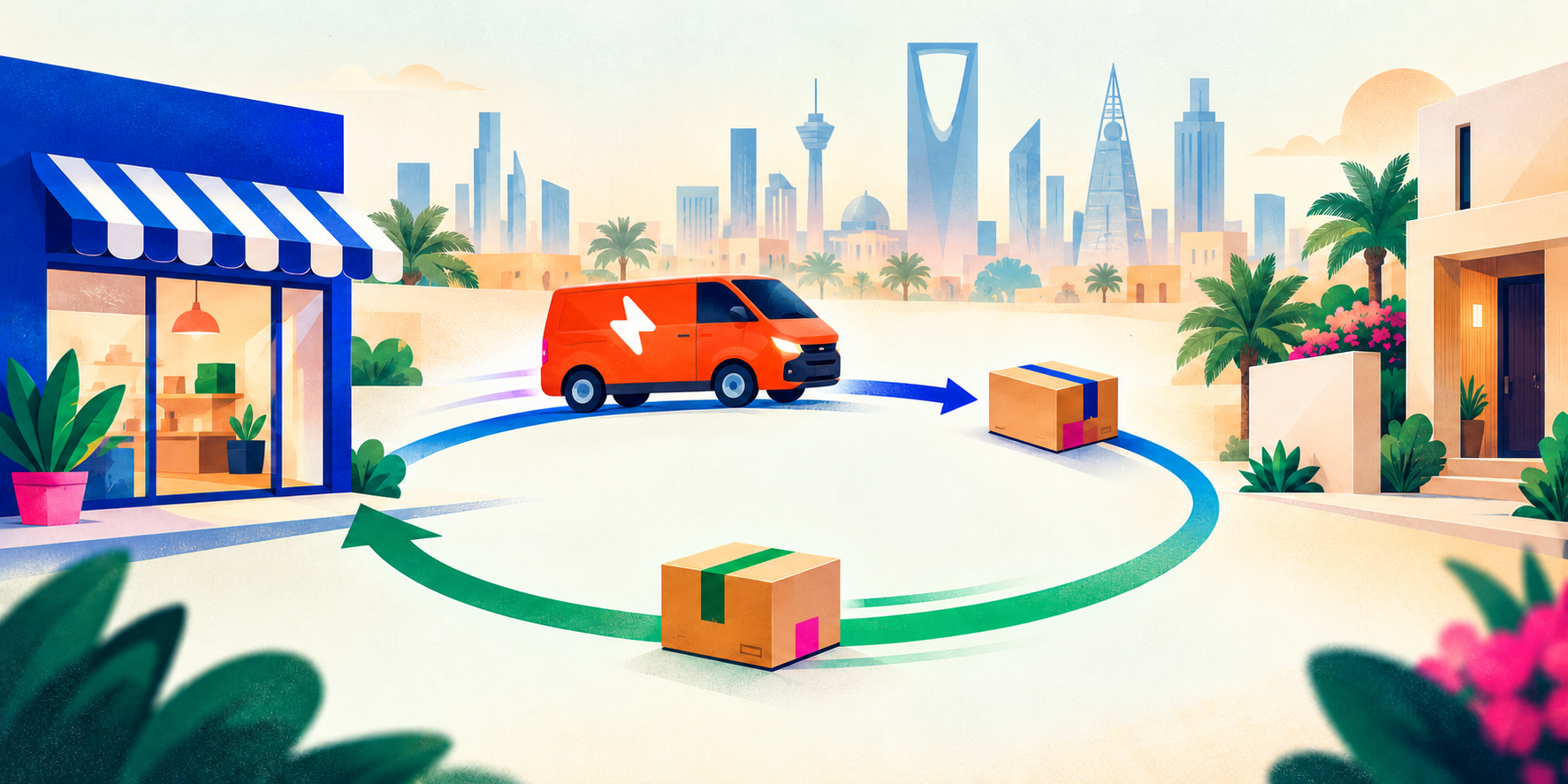
An ecommerce return is not simply a parcel travelling in the opposite direction. When a customer refuses delivery, an attempt fails or a buyer requests an exchange after receipt, a chain of decisions begins. Who pays? Should delivery be attempted again? Where does the product go? Can it return to sellable inventory?
That is why ecommerce returns in Saudi Arabia need a defined process joining customer service, warehouse operations, the delivery provider and financial records—not an isolated message and a new shipping label with no reference to the original order.
Short answer: To reduce returns and refused deliveries, first separate cancellation, failed delivery, refusal at the door, a post-delivery return and an exchange. Validate order data before dispatch, publish a clear return policy, link every reverse shipment to its original order, record the reason and inspect the product on arrival. Measure cost per successfully delivered order, not label price alone. ZAJEX states that it supports returns and reverse-logistics operations subject to the merchant's service and agreement.
What counts as an ecommerce return?
“Return” is often used for several operationally different events. Combining them produces misleading reports and cost calculations.
| Case | When it happens | Typical route | What to measure |
|---|---|---|---|
| Pre-dispatch cancellation | Before the parcel is handed to the carrier. | Stop fulfilment or restore the item to inventory. | Cancellation reasons and detection time. |
| Failed delivery | After dispatch but before the customer receives it. | Another attempt or return to origin under the agreed process. | Failure reason and next-attempt success. |
| Refused delivery | The courier arrives but the customer does not accept the parcel. | Close the attempt, escalate or return the shipment. | Reason, product, city and payment method. |
| Post-delivery return | The customer received the item and later asks to return it. | Authorisation, reverse pickup, inspection and refund decision. | Reason, item condition and closure time. |
| Exchange | The customer wants a different size or item. | Return the first item and send the replacement through a linked process. | Exchange time, cost and completion rate. |
Reverse logistics is the movement from the customer or delivery point back to the store, warehouse or other designated destination. It provides transport and status tracking. It does not replace the store’s return policy or decide whether a customer qualifies for a refund.
Why do returns and refused deliveries increase?
Incorrect address or contact data
An incomplete phone number, an unclear district or an outdated address can turn a valid order into a failed attempt. Even when the product is perfect, the cost rises if the courier cannot reach the customer.
A delivery promise that operations cannot meet
If the buyer expects the order today and waits several days, the need may disappear and confidence may decline. The checkout promise should reflect preparation time, coverage and the selected service—not the best possible scenario.
Unconfirmed cash-on-delivery orders
COD allows an order without advance payment. A buyer who did not see the final total clearly, forgot the order or did not know the arrival time may refuse it. The answer is not necessarily to remove COD, but to manage its risk with verification and useful communication.
Product expectations do not match reality
Inaccurate images, weak size guidance or missing material and colour details increase post-delivery returns. Delivery did not create the problem, but reverse logistics carries its consequence.
Picking errors or transport damage
The wrong product, missing quantity or unsuitable packaging creates a preventable return. Separate warehouse errors from transport damage so the responsible process can be corrected.
A complete ecommerce return workflow
1. Make the policy understandable before checkout
State the request window, excluded products where applicable, required product condition, refund method and responsibility for return fees under your policy and applicable rules. Customers should not discover the terms only after a problem.
2. Classify the case before creating a reverse shipment
Was delivery ever completed? Does the customer want a refund or exchange? Is the issue product, picking, damage, address or timing? The answer determines the correct status, process and cost.
3. Link the return to the original order and shipment
The return should carry the order reference, original tracking number, item and quantity, reason and COD amount where relevant. A separate label with no relationship to the original order makes reconciliation, inventory and customer support harder.
4. Tell the customer what happens next
Provide packing instructions, pickup date or window, label requirements, tracking access and an estimate for refund or replacement processing. Reverse pickups can fail when their instructions are unclear too.
5. Track the reverse journey
Use meaningful states: return requested, eligible, awaiting pickup, collected, returning to store, received, inspected and closed. A single “returned” status across the entire journey is not enough.
6. Inspect the product when it arrives
Record package, item, accessories and serial number condition where needed. Decide whether it can return to inventory, needs repackaging or repair, or cannot be resold. This prevents system inventory from drifting away from physical stock.
7. Close both the operational and financial work
Receipt of the parcel is not closure. Complete the refund or exchange, update order and inventory records, record fees and final reason, and tell the customer the outcome.
Reducing refused cash-on-delivery orders
COD refusal should not be treated as one problem solved by blocking every customer. Start with measurable controls:
- Show product price, delivery charge and final total before confirmation.
- Verify the phone number and address, especially for a first or high-value order.
- Send an order confirmation with summary and expected timing.
- Do not dispatch before the item is available and ready.
- Share tracking and the out-for-delivery update.
- Notify the customer before arrival and clarify accepted payment methods.
- Give support a way to correct address or timing before an attempt fails.
- Record a specific refusal reason instead of using one generic label.
- Analyse refusal by product, city, campaign and basket value.
- Test confirmation on a defined segment and compare results.
COD also affects collection and settlement reporting. An undelivered order and an unsettled amount are financial and operational issues, not only delivery events.
Reducing post-delivery returns
Improve product pages
Use accurate images, real dimensions and sizing, and clear material, colour and package-content descriptions. Turn recurring customer questions into information available before purchase.
Check the order before sealing the parcel
Match order number, item, quantity, colour and size. A simple pick-and-pack checklist can prevent a full outbound and return cost.
Use packaging suited to the product’s journey
Packaging should protect the item rather than merely look attractive. Monitor actual damage types instead of adding material without diagnosis.
Match delivery speed to the customer’s need
The chance of a changed decision may fall when an order arrives within its chosen promise. In Riyadh, ZAJEX offers Bullet for eligible 1–4-hour orders and Express within 24 hours. Speed alone cannot prevent returns, but it can reduce the gap between purchase and receipt when time matters.
For a practical service comparison, read ZAJEX Bullet vs Express: choose the right delivery service.
The real cost of a return
Return cost is broader than a reverse label. It may include:
- The first delivery attempt and another attempt.
- Return-to-origin transport for an undelivered parcel.
- Pickup from the customer after delivery.
- COD and reconciliation costs affected by status.
- Customer-service time and coordination.
- Inspection and repackaging.
- Loss of item value or resale eligibility.
- Replacement delivery.
- Refund and payment-processing cost.
Compare cost per successfully delivered order, not label price alone. ZAJEX’s delivery-cost guide explains how attempts, returns and COD can change the merchant’s final cost.
Ecommerce return metrics that matter
Post-delivery return rate
Returned orders after receipt divided by delivered orders in the same period. Break it down by product and reason.
Failed-delivery rate
Orders not delivered divided by orders sent out for delivery. Separate no answer, bad address, refusal and rescheduling.
First-attempt success rate
The percentage delivered without another attempt. A higher rate normally lowers cost and improves customer and courier experience.
Time to close a return
Measure from the customer’s request until receipt, inspection and completed refund or exchange. Measuring only transport hides delay elsewhere.
Leading return reasons
Use defined categories such as size, colour, description mismatch, damage, wrong item, changed mind, delay and unreachable customer. Keep optional notes, but do not depend only on free text.
How ZAJEX fits into return operations
ZAJEX states that returns management and reverse logistics are part of its operational capabilities alongside tracking, COD and ecommerce delivery. Shipment status and order linkage help merchants understand where a parcel is and which team needs to act.
Do not assume every merchant account has identical workflow or pricing. Before launch, confirm in writing:
- Who creates the return request?
- Is pickup from the customer or a designated point?
- Where does the parcel return?
- Which cities and areas are covered?
- How many reverse-pickup attempts are included?
- How is the return linked to the original order?
- Which statuses are visible to merchant and customer?
- What are the fees and expected duration?
- How is an undelivered COD shipment treated?
- Which return fields appear in reports?
ZAJEX can transport the shipment and update its status under the agreed service. Return eligibility, item inspection, refund and inventory disposition remain the merchant’s policy and operation.
For a broader view, read ZAJEX shipping: services, benefits and comparison with traditional delivery.
A practical 30-day plan
Week 1: establish the baseline
Export the last month’s orders. Separate cancellations, failed delivery, refusal and post-delivery return. Calculate rates and approximate cost, then identify the top three reasons.
Week 2: fix the two largest causes
If address quality is the issue, improve validation. If size drives returns, repair the product page. If COD refusal is high, test confirmation and arrival updates.
Week 3: define the reverse workflow
Assign an owner to each step. Define statuses, original-order linkage, customer instructions and warehouse inspection and receiving.
Week 4: test and compare
Run the process on a sample and compare first-attempt success, refusal rate, time to close and cost per successful order. Standardise what works and clarify remaining gaps.
Bottom line
The best return strategy is not hiding the policy or preventing every return. It is understanding each case, preventing avoidable errors and making reverse logistics clear when it is necessary.
Separate cancellation, failed delivery, refusal, post-delivery return and exchange. Link the reverse movement to the original order, keep the customer informed, inspect the item and measure reason, time and cost. When evaluating a delivery provider such as ZAJEX, confirm return, COD, coverage and fee details for your merchant agreement rather than relying on a general description.
That turns ecommerce returns from an uncertain cost and scattered complaints into an operation the store can measure and improve.